Bantham RADAR
- API-controlled clinical question pathways
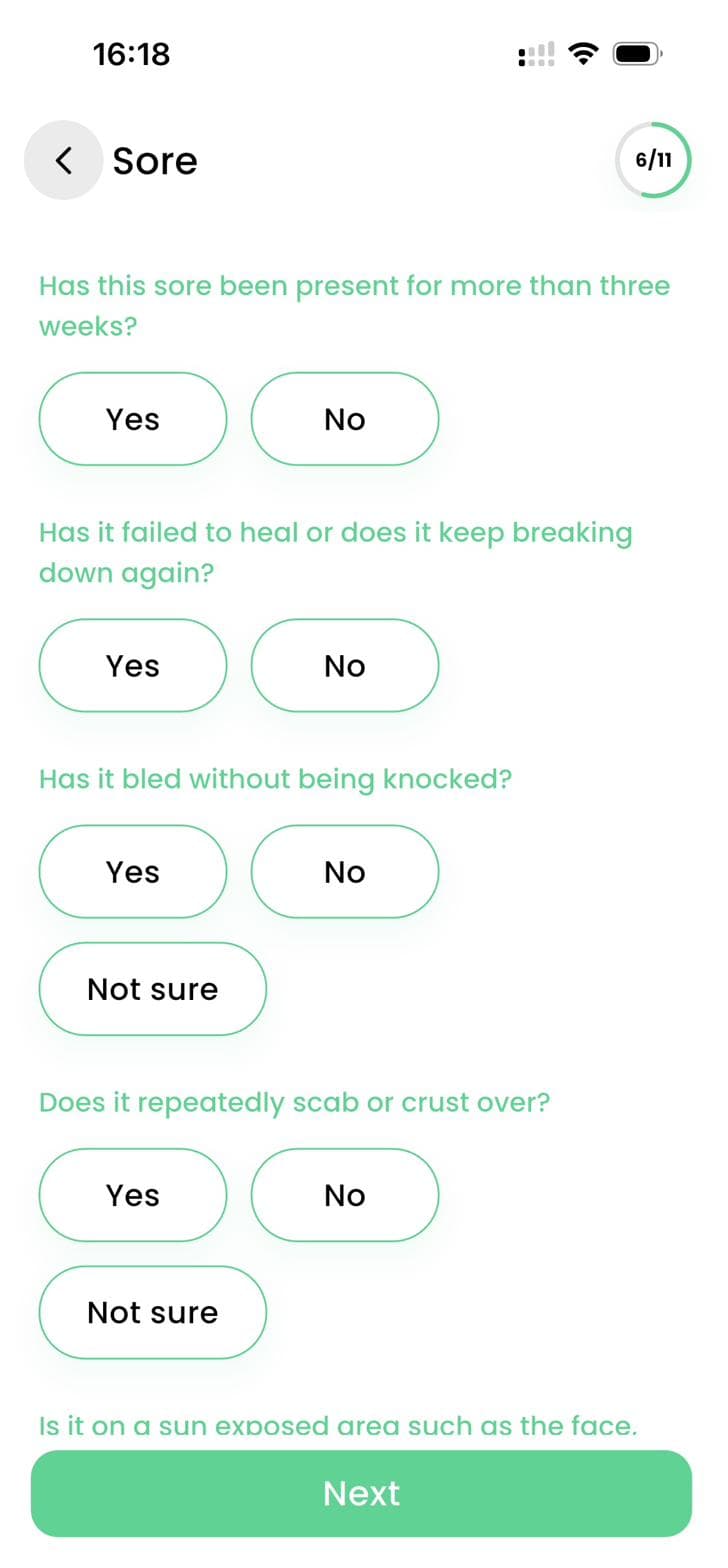
- Branching questions without new app releases
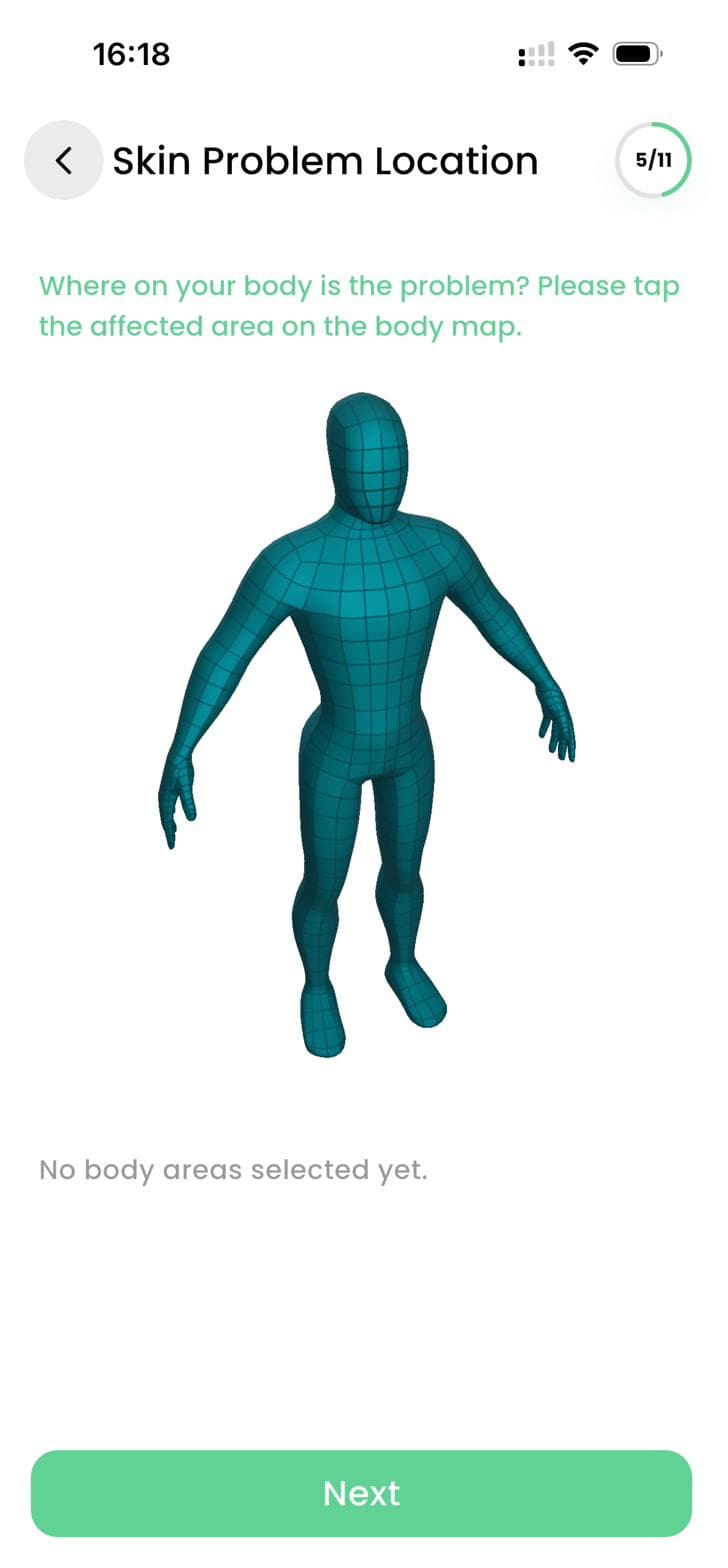
- Interactive body-location capture
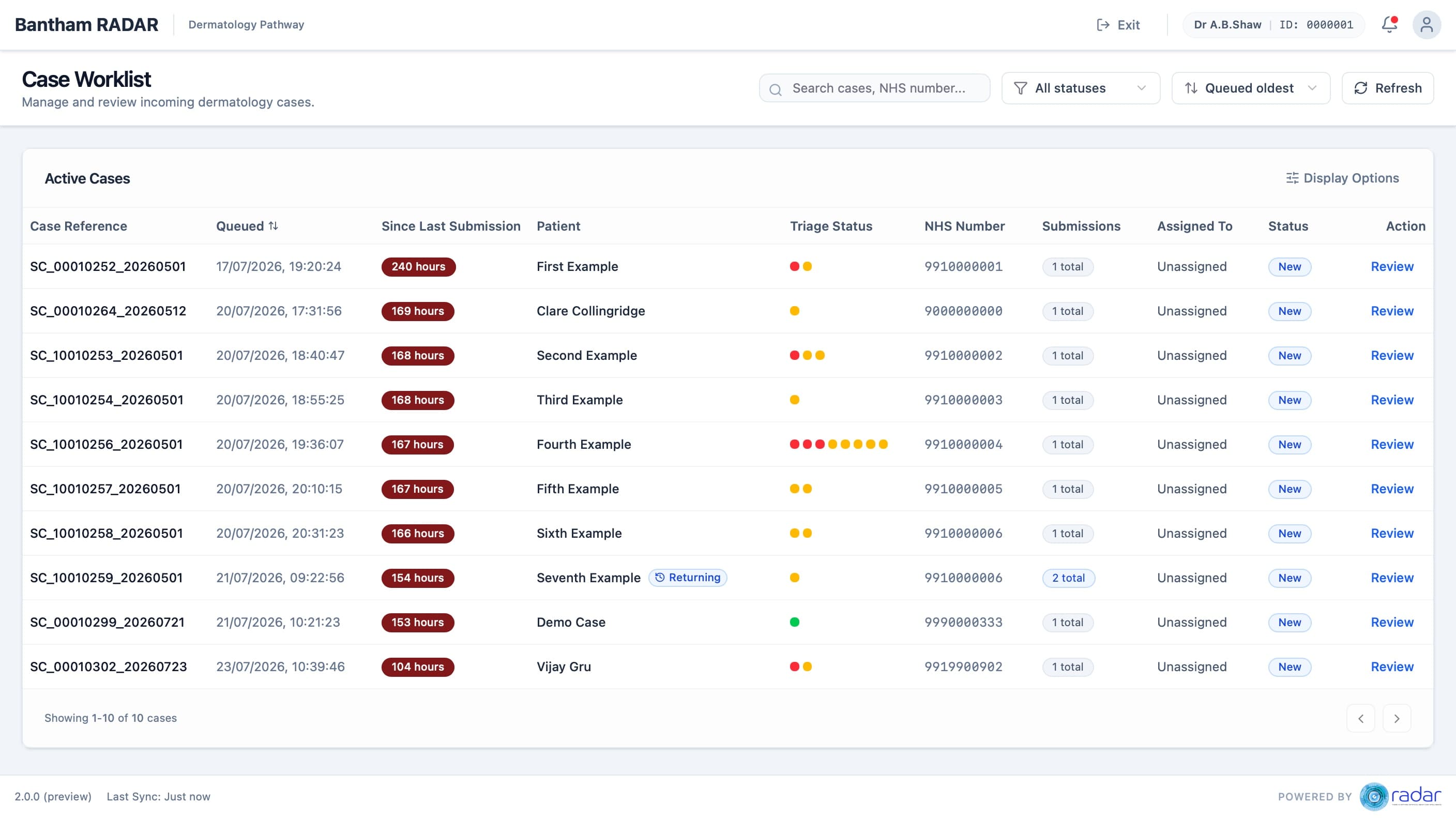
- Clinician worklist and case-review workspace
- Role-based analytics dashboards
- Patient image and clinical-data handling
- Templated clinical PDF reports
- EPR and laboratory-system integration
- Replaced the hardcoded Flutter questionnaire with a rules engine
- Built the React and Vite clinical workspace
- Implemented user-type permissions
- Integrated System C Medway and WinPath
- Built production PDF report generation
- Implemented PHI-safe logging and observability
- Delivered within a regulated UK health-data environment
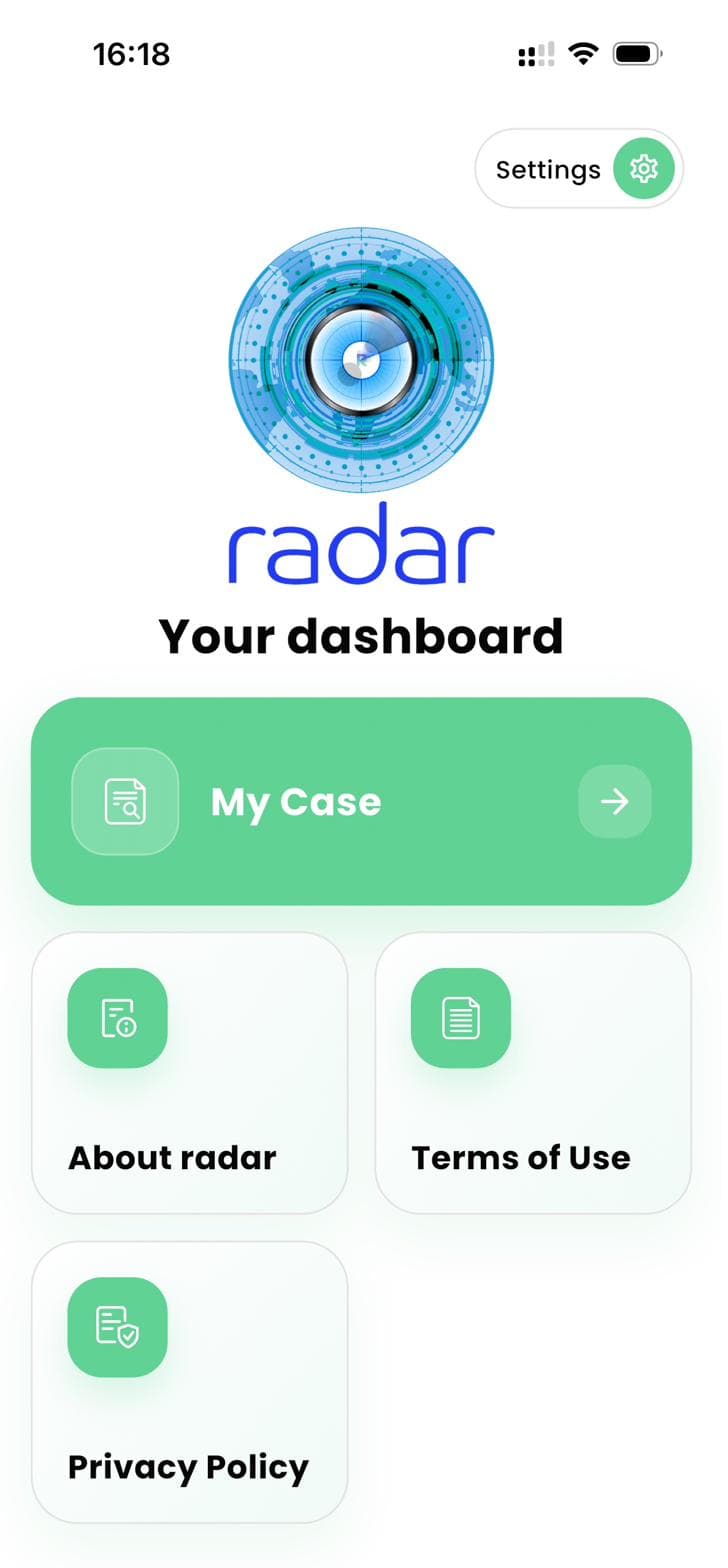
A configurable pathway rendered from centrally managed rules.
The mobile interface is the visible layer of an API-driven question system that records branching answers and anatomical context as structured data.
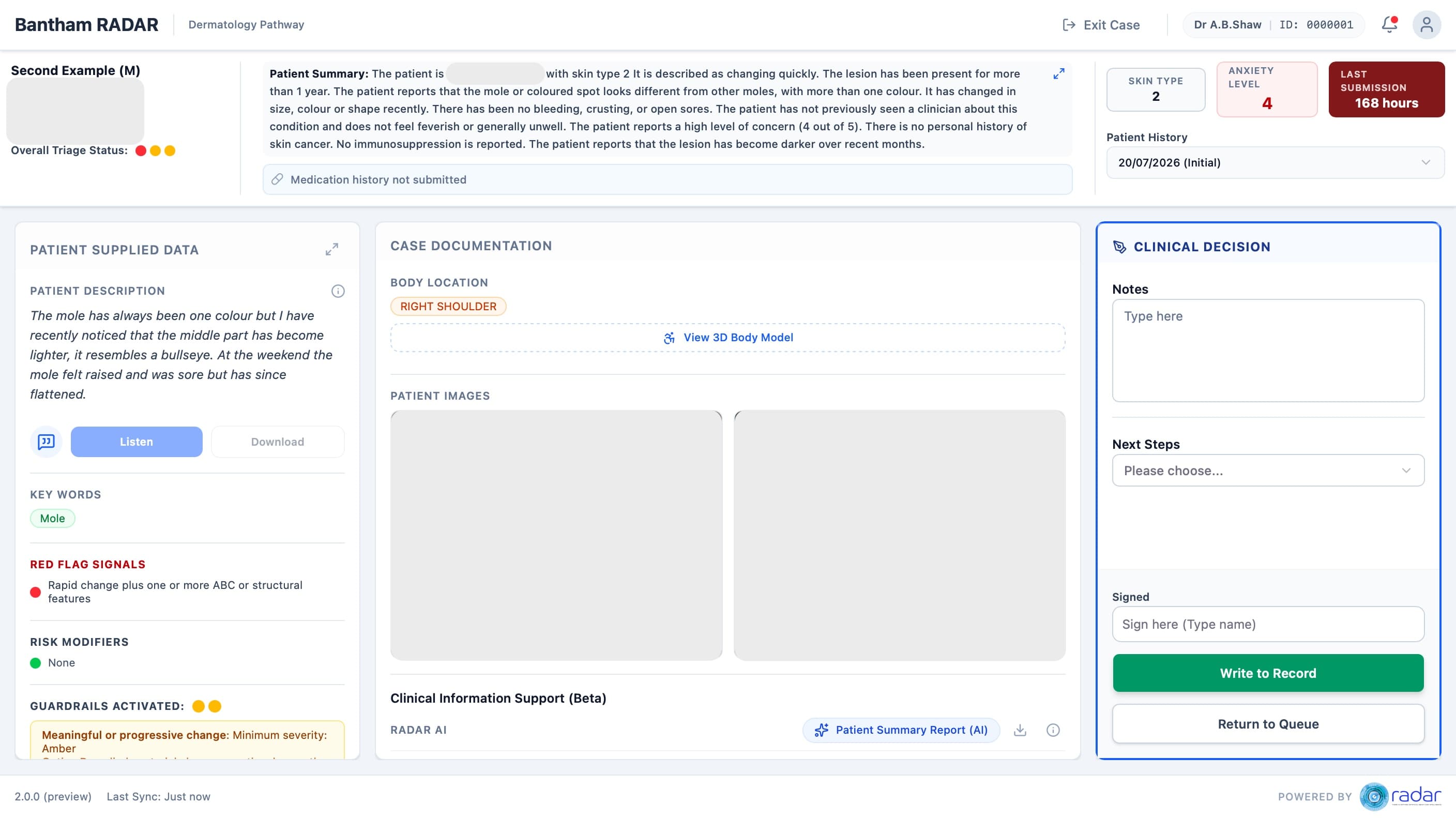
Case data, review actions and reporting in one workspace.
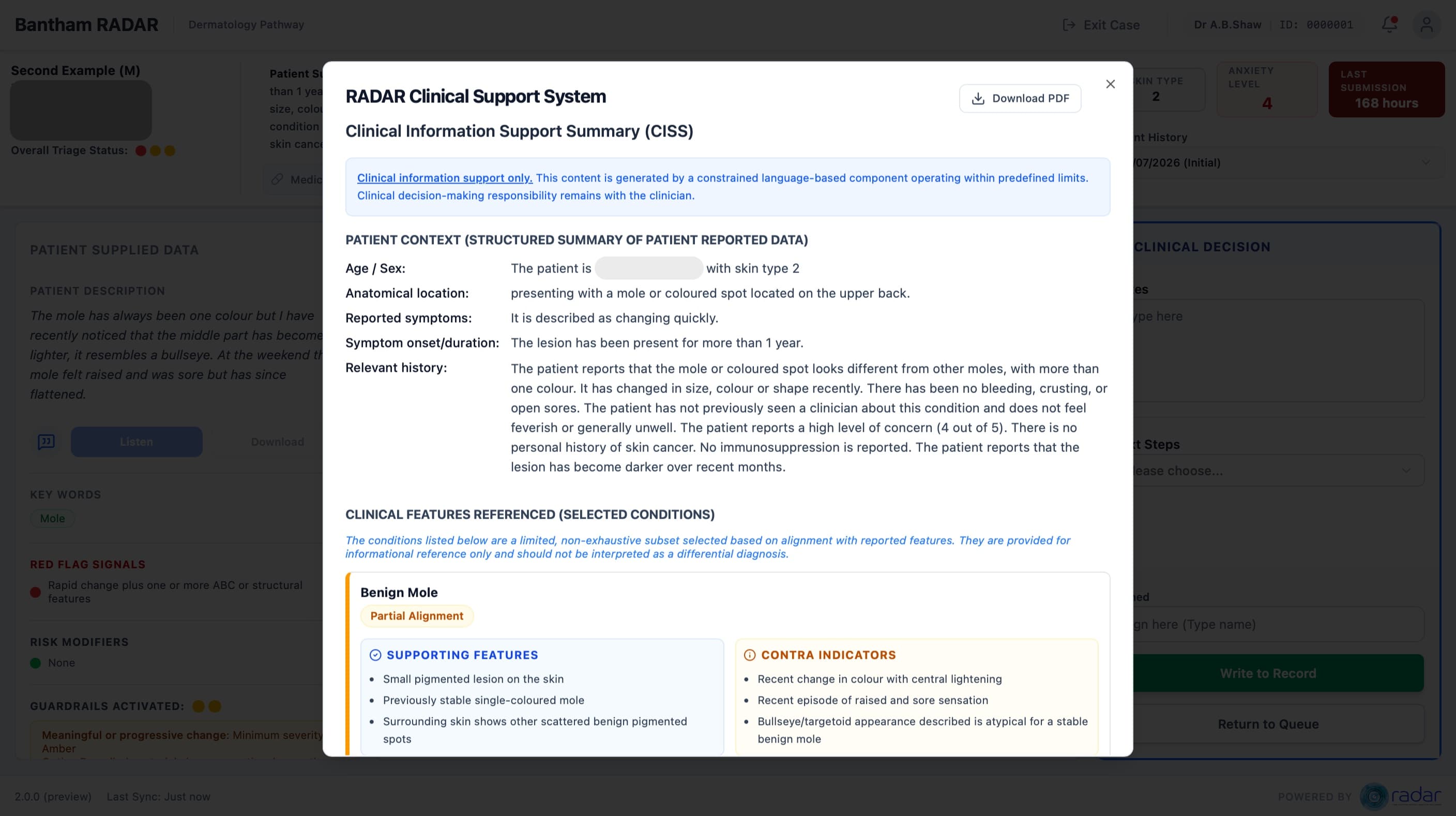
The web application brings structured patient data into worklists, review views and analytics while enforcing permissions by user type.
Modernising clinical software without weakening control of sensitive data.
BriefProject overview
LiteByte replaced the hardcoded question set in the Flutter app with an API-delivered rules engine, then built the surrounding clinical workspace for case review, reporting, analytics and continued care-management development.
The work sits inside a regulated environment handling confidential patient information. Role-based access, PHI-safe observability, structured clinical records and controlled integrations were architectural requirements rather than additions at the end of the build.
01Rules-driven Flutter renderer
We moved question branches and body-location capture out of compiled mobile code so the pathway can be changed centrally without another app release.
02Clinical web platform
A React and Vite workspace assembles patient-reported context, images, flags, history, clinical actions and analytics in permission-aware views.
03Healthcare infrastructure
EPR and LIMS integration, templated clinical PDFs, PHI-safe logs and VM-based deployment connect the software to the wider care pathway.
Turning patient input into controlled, interoperable clinical data.
01Deliver rules by API
The Flutter client requests the current pathway and renders only the branches relevant to the recorded answers and selected body area.
02Normalise the case data
Responses, anatomical location and patient images are assembled into a structured record that can enter the clinical queue and later reporting flows.
03Build the review workspace
The React platform combines the worklist, case context, red flags, history and constrained information support without automating clinical sign-off.
04Integrate the care pathway
Templated PDFs and structured connections to System C Medway and WinPath carry approved information into EPR and laboratory workflows.
The capability to modernise regulated clinical software end to end.
Bantham RADAR demonstrates LiteByte's ability to work across mobile architecture, clinical web applications, confidential data, reporting, analytics and healthcare-system integration within one regulated delivery.
The initial modernisation scope was delivered in two weeks for £4,000, compared with the six-week, £34,000 agency quote recorded for the engagement. That technical foundation is now supporting continued work on a unified care-management view.
“LiteByte delivered the whole thing in two weeks. Not even close.”