Trace Labs
- Plain-language circuit requests
- Automatic clarification questions
- Live datasheet and reference-design search
- Component, symbol and footprint sourcing
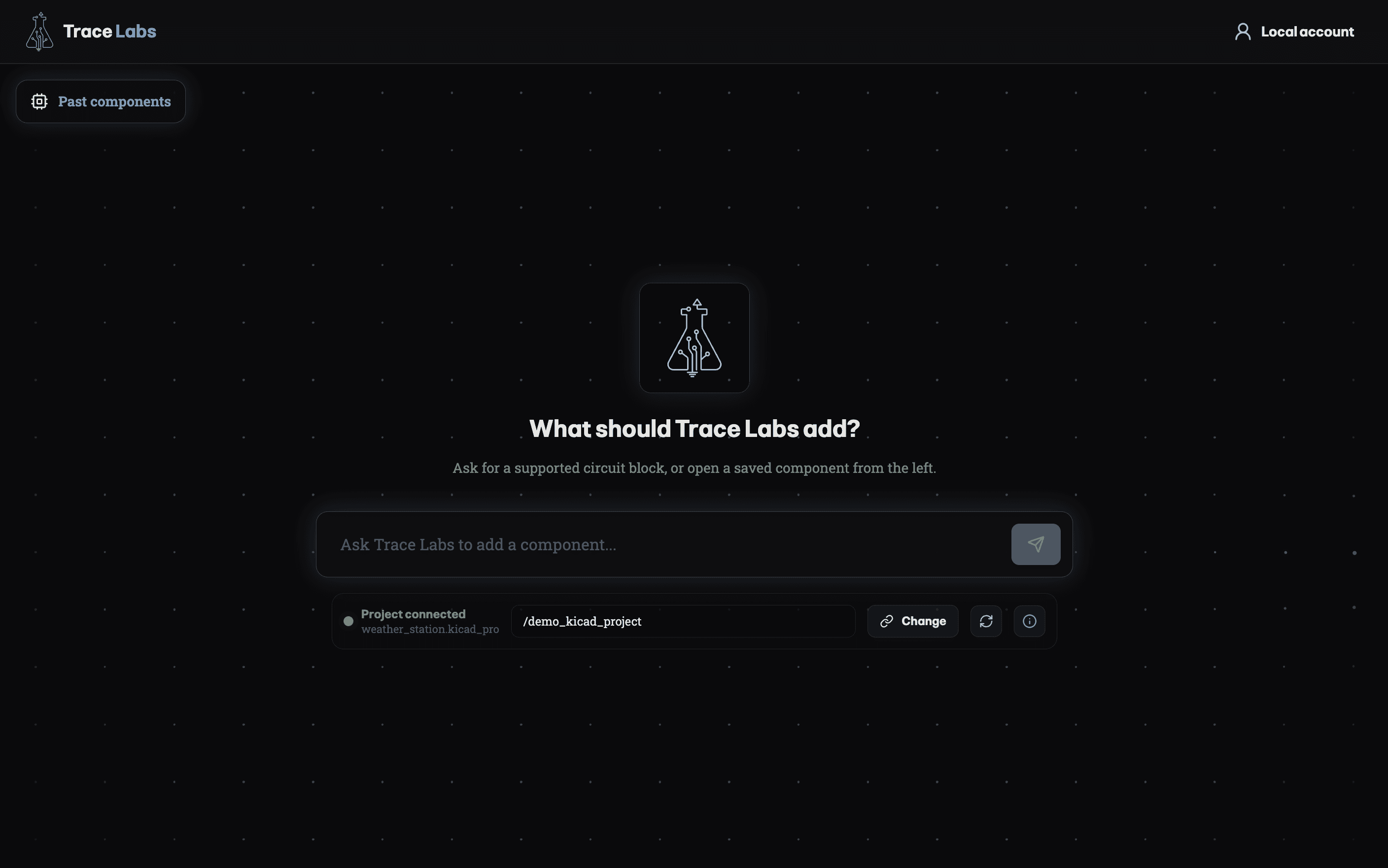
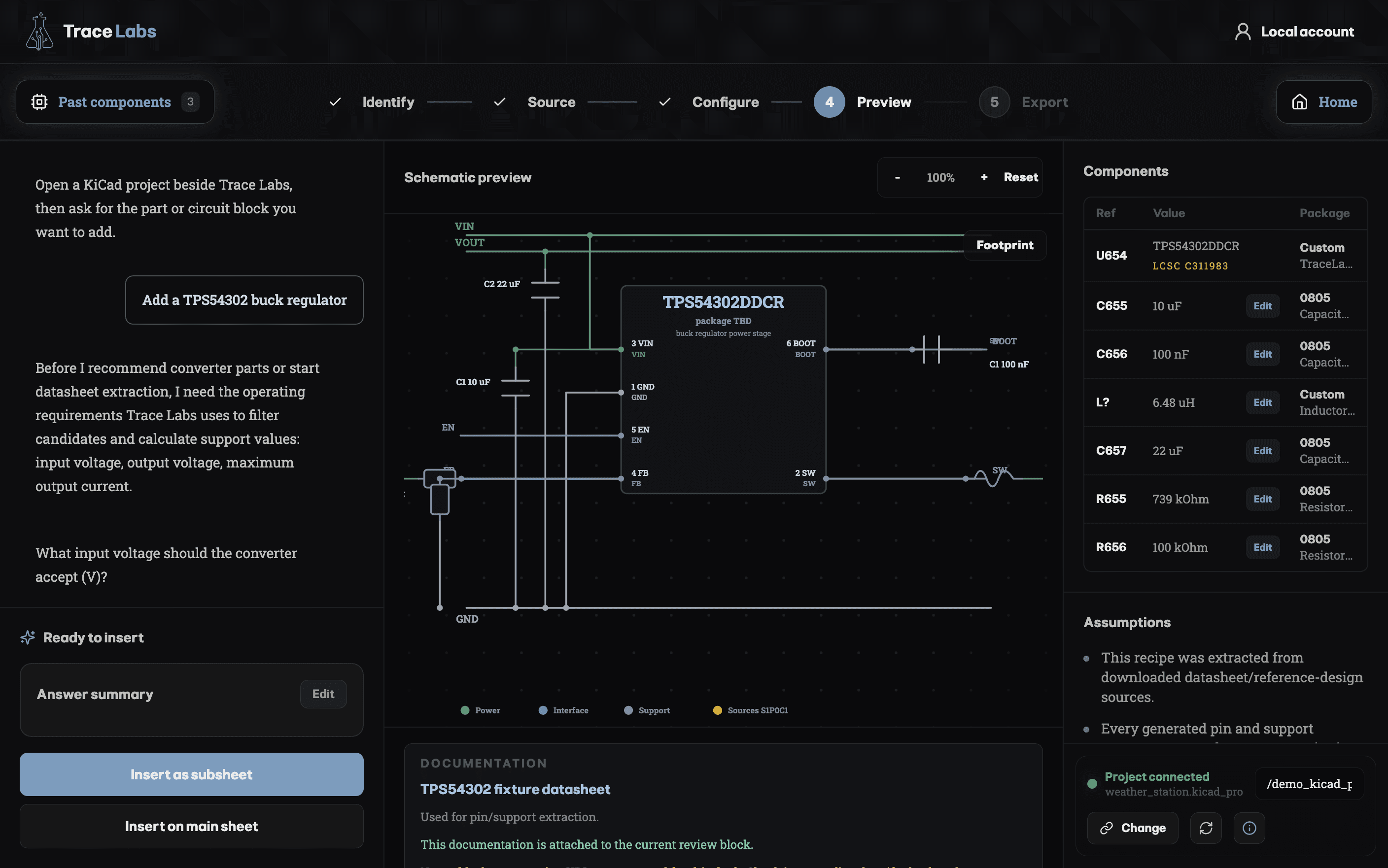
- Schematic preview before export
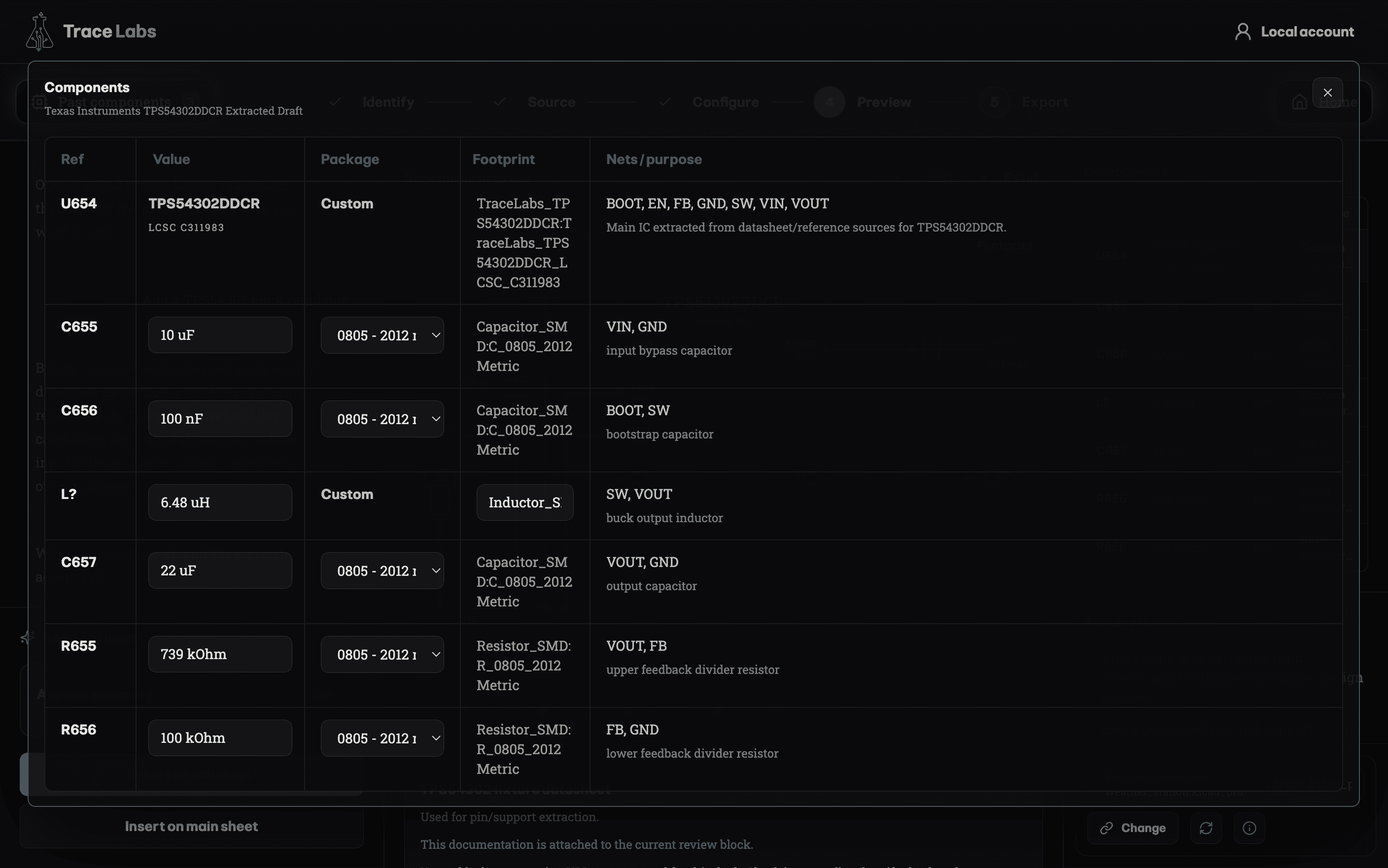
- Editable components, nets and assumptions
- Linked-sheet or root-schematic insertion
- Project-local library handling
- Built the Electron and React desktop interface
- Built the local FastAPI and Pydantic service
- Created the deterministic circuit-generation workflow
- Integrated KiCad CLI and ActionPlugin interfaces
- Implemented supplier footprint lookup and conversion
- Separated AI research from the final deterministic output
Every generated structure stays visible before export.
The React interface brings conversation, project state, schematic structure, component data and source assumptions into one local engineering workspace.
Let AI guide the workflow without allowing it to own the hardware output.
BriefProject overview
LiteByte is building a desktop application that combines a conversational design workflow with the deterministic requirements of electronic design automation. The work spans the Electron interface, local Python services, data validation, component sourcing and direct KiCad integration.
The architecture deliberately separates probabilistic assistance from schematic generation. Models interpret intent, surface reference material and ask for missing constraints; typed structures and explicit rules own the artifact that reaches the engineer's project.
01Desktop application architecture
Electron and React provide a local, multi-stage interface for project selection, design conversation, schematic preview and component review.
02Grounded AI workflow
Intent analysis and clarification are tied to live datasheets, reference designs and supplier footprint data instead of relying on unsupported model output.
03Deterministic EDA integration
Validated circuit structures remain inspectable before the KiCad bridge creates a linked hierarchical sheet or merges the block into the root schematic.
Narrowing model-assisted intent into a validated engineering artifact.
01Interpret the request
The local service identifies the requested circuit function and returns clarification questions wherever operating requirements remain incomplete.
02Ground the recommendation
Live datasheets, reference designs, symbols and supplier footprint information provide evidence for supported component candidates.
03Validate the structure
FastAPI and Pydantic turn chosen constraints into typed components, nets and assumptions before the generation path accepts them.
04Preview and insert
The interface exposes the schematic, component table, nets and assumptions before the CLI or ActionPlugin bridge writes to the selected KiCad project.
The capability to connect AI interfaces to specialist engineering tools.
Trace Labs demonstrates the breadth needed for applied engineering software: desktop application development, typed Python services, source-grounded AI workflows, deterministic generation and direct integration with an established EDA environment.
The system is still in development, but the working architecture already demonstrates an important delivery pattern: AI can accelerate ambiguous research and configuration while validated software remains responsible for the final artifact.